24/7 Vehicle Recovery in Nigeria: What Happens When You Call for Help

A vehicle breakdown can happen to anyone — on a quiet street, a busy expressway, late at night or far from home. In Nigeria, where long-distance travel is common and road conditions vary, the need for fast, reliable, 24/7 vehicle recovery is more important than ever.
But many drivers don’t actually know what happens after they call a recovery company. How long does it take? What does the team do when they arrive? How are vehicles lifted? What should you do while waiting?
This guide explains the entire process, so you know exactly what to expect from a professional vehicle recovery service like Ace Recovery — Nigeria’s nationwide, 24/7 recovery and haulage provider.
1. What Is 24/7 Vehicle Recovery?
Vehicle recovery is the process of safely rescuing and transporting a broken-down or damaged vehicle from one location to another. “24/7” means the service is available at all hours, including:
• Late-night breakdowns
• Early morning emergencies
• Public holidays
• Long-distance highway situations
• Accident scenes
• Abandoned or immobilised vehicles
Ace Recovery operates nationwide, with trained teams ready to move at any time.
2. Common Reasons Nigerians Call for Vehicle Recovery
Breakdowns happen for many reasons, but these are the most common:
A. Engine failure
Overheating, oil leaks, or worn-out components can immobilise a vehicle instantly.
B. Dead battery
Often caused by long traffic jams, night driving, or leaving the car parked too long.
C. Tyre blowouts
Bad roads, potholes, and debris make this frequent across Nigeria.
D. Accident recovery
Even minor collisions can render a car unsafe to drive.
E. Electrical faults
Modern vehicles can shut down completely due to sensor or electrical failures.
F. Fuel problems
Running out of fuel or using contaminated fuel can immobilise a car.
G. Immobilised luxury vehicles
High-value cars (Mercedes, Lexus, BMW, G-Wagon) require flatbed recovery — never wheel-lift towing.
Regardless of the cause, the priority is your safety and the safe handling of the vehicle.
3. What Happens Immediately After You Call Ace Recovery?
When you call a 24/7 emergency line (or submit an online request), here’s what happens:
Step 1: Rapid Response & Location Verification
You provide key details:
• Exact location
• Destination
• Vehicle type
• Whether it’s mobile or not
• Any hazards at the location
The nearest available recovery truck is dispatched instantly using smart routing.
Step 2: The Recovery Team Is Mobilised
Teams are stationed in: Lagos, Abuja, Port Harcourt, Ibadan, Benin, Kaduna, Enugu, and across Nigeria.
Based on your situation, Ace Recovery dispatches:
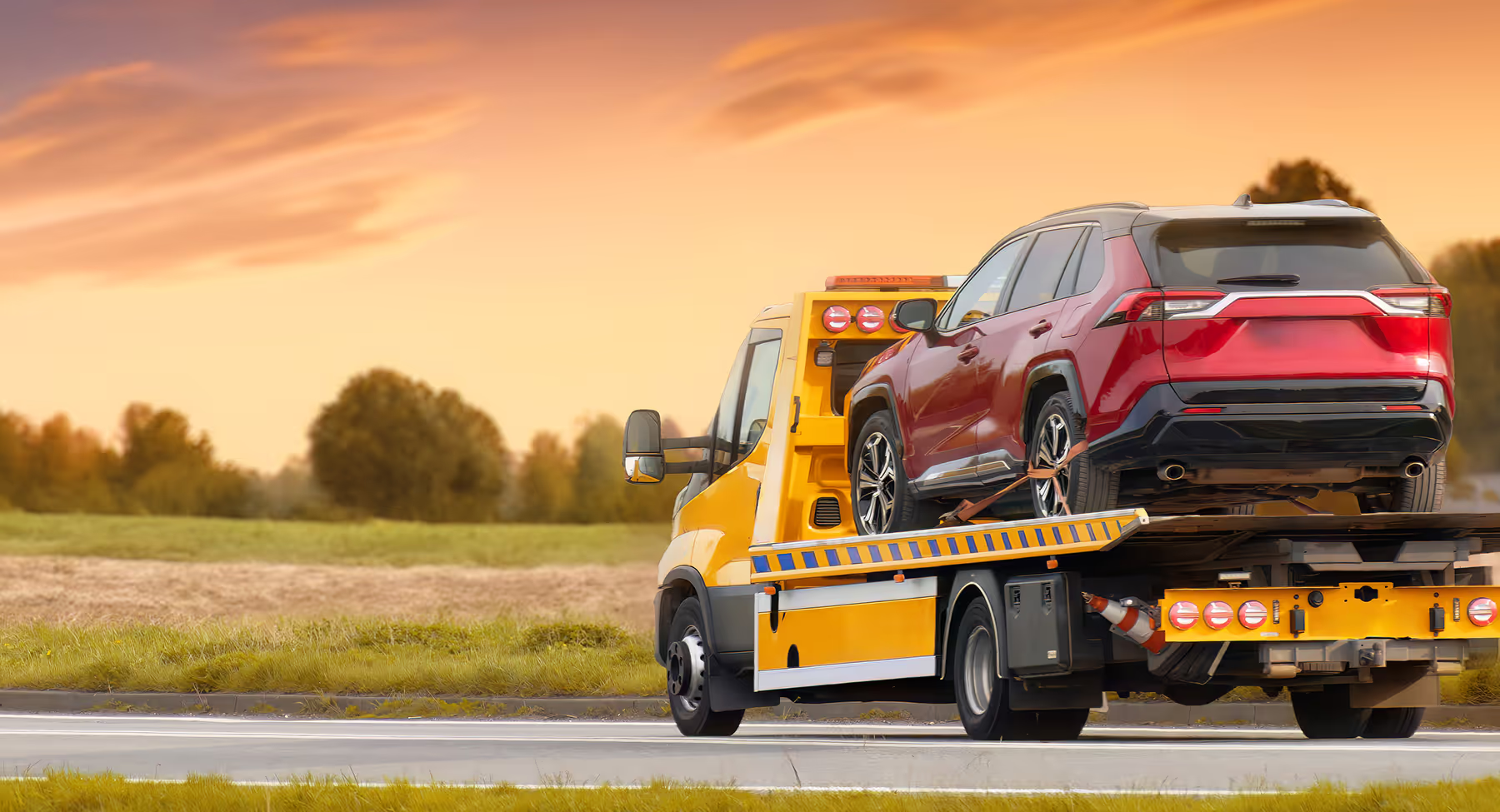
• A flatbed truck (best for long-distance or luxury vehicles)
• A tow truck (for short urban recovery)
• A specialised recovery unit (for accidents or deep-ditch extraction)
Step 3: Live ETA Updates
You receive updates including:
• Estimated arrival time
• Driver’s name
• Vehicle plate number
• Direct phone contact
This ensures full visibility, especially during late-night emergencies.
4. What Happens When the Recovery Team Arrives?
Ace Recovery follows a strict safety and operations procedure:
A. Situation Assessment
The team inspects:
• Your vehicle
• Traffic conditions
• The vehicle’s position
• Any hazards
• Whether lifting or winching is required
B. Vehicle Securing
Before loading, the team:
• Secures the area
• Places cones or hazard markers
• Puts the vehicle in neutral (if possible)
• Disconnects power if needed
• Blocks the wheels
C. Loading the Vehicle
If a flatbed is used:
• The bed is lowered
• The winch is attached
• The vehicle is gently pulled onto the platform
• Wheels are strapped securely
• The bed is raised and locked
If wheel-lift towing is used (for non-luxury cars):
• Front or rear wheels are lifted
• Safety chains are attached
Ace Recovery uses flatbeds for 99% of luxury and long-distance recoveries.
D. Transport to Destination
You may ride in the recovery truck (if safe) or meet the team at the destination.
The route is selected based on:
• Traffic
• Road conditions
• Safety
• Distance
5. How Long Does 24/7 Recovery Take?
Typical response times:
- Lagos: 20–45 minutes
- Abuja: 20–40 minutes
- Port Harcourt & Ibadan: 25–50 minutes
- Highway routes: varies based on distance
Night-time jobs tend to be faster due to lighter traffic.
6. What Should You Do While Waiting for Recovery?
Your safety is the top priority. Experts recommend:
A. Move away from the road
Stay far from oncoming traffic, especially on expressways.
B. Keep hazard lights on
Make your vehicle more visible to other drivers.
C. Stay inside the vehicle only when safe
On major highways, staying inside may be safer.
D. Avoid random roadside tow operators
They often use unsafe methods that cause damage.
E. Don’t repeatedly start the engine
This may worsen the problem.
7. Why Use a Professional Recovery Company?
A. Zero-damage loading
Proper winching and flatbed loading prevent suspension, bumper, and undercarriage damage.
B. Safety-certified handlers
Trained professionals ensure correct vehicle handling.
C. Nationwide coverage
Support is available across Nigeria.
D. 24/7 readiness
No delays, no excuses.
E. GPS tracking & communication
You can follow your vehicle’s movement at all times.
F. Optional insurance
Extra protection for high-value or long-distance recoveries.
Conclusion
A vehicle breakdown doesn’t have to be a nightmare. With a professional 24/7 recovery service like Ace Recovery, help is always minutes away — anywhere in Nigeria. Understanding the recovery process gives you confidence and reassurance during an otherwise stressful moment.
Whether you drive a luxury SUV, a compact car, or a fleet vehicle, Ace Recovery guarantees safe handling, nationwide coverage, and zero hidden fees.
More insights
Explore additional articles about transportation and vehicle maintenance








Don’t leave your vehicle to chance.
500+ vehicles delivered nationwide with 95% satisfaction. Yours could be next.